

Husqvarna 435 Chainsaw Owners Manual: A Comprehensive Guide
This manual details the Husqvarna 435, 435e, and 440e chainsaws, offering guidance on operation, maintenance, and safety. Engine specs include a 40.9 cm³ displacement and 1.6 kW power.
The Husqvarna 435 is a versatile chainsaw designed for homeowners and occasional users. Featuring a 40.9 cm³ engine delivering 1.6 kW of power, it’s ideal for various cutting tasks. This manual provides essential information for safe and efficient operation, covering everything from assembly to maintenance, ensuring longevity.
Safety Precautions
Always prioritize safety when operating the Husqvarna 435. Wear appropriate protective gear, including eye and ear protection, gloves, and sturdy boots. Be aware of kickback risks and maintain a firm grip. Never operate the chainsaw with one hand, and ensure a clear work area.
Chainsaw Components & Identification
The Husqvarna 435 features a robust design. Key components include the engine, bar, chain, and various controls; Familiarize yourself with each part’s location and function for safe operation and effective maintenance. Understanding these elements is crucial for proper chainsaw use.
Key Parts of the Husqvarna 435
Essential parts include the 40.9 cm³ engine, delivering 1.6 kW of power. The chainsaw bar supports the cutting chain, while the handle provides control. A chain brake enhances safety, and the fuel tank powers operation. Proper identification aids maintenance.
Understanding the Chainsaw’s Controls
The Husqvarna 435 features essential controls: a throttle trigger regulates engine speed, a choke controls starting, and an on/off switch manages power. The chain brake ensures safety, while a throttle lockout prevents accidental acceleration. Familiarity is key for safe operation.
Assembly Instructions

Before first use, carefully assemble your Husqvarna 435. This includes attaching the guide bar and chain, ensuring proper alignment, and adjusting chain tension. Double-check all components are securely fastened before operation for optimal performance and safety.
Starting the Chainsaw
To start, ensure the chainsaw is on a flat surface and the chain brake is engaged. Follow the cold start procedure for initial ignition, or the warm start for subsequent restarts. Always maintain a firm grip and clear area before initiating the engine.
Cold Start Procedure
For a cold start, prime the carburetor by pressing the primer bulb several times until fuel is visible. Engage the choke, set the throttle to the starting position, and firmly grasp the starter handle. Pull briskly until the engine starts, then disengage the choke.
Warm Start Procedure
When warm, the Husqvarna 435 typically doesn’t require choking. Set the throttle to the starting position and pull the starter cord with a firm, steady motion. If it doesn’t start immediately, briefly engage the choke and try again.
Operating Instructions
Always maintain a firm grip with both hands while operating the Husqvarna 435. Ensure a clear work area and be mindful of kickback. Use appropriate personal protective equipment, and always follow all safety precautions detailed within this comprehensive owner’s manual.
Chain Maintenance
Regular chain sharpening is crucial for efficient cutting with the Husqvarna 435. Maintain proper chain tension to prevent derailment and ensure optimal performance. Inspect the chain frequently for damage, and replace it when necessary for continued safe operation.
Chain Sharpening Guide
Utilize a round file of the correct size to sharpen the cutting teeth. Maintain the correct filing angle and depth gauge for optimal performance. Sharpen each tooth consistently, alternating sides to prevent uneven wear and ensure a smooth, efficient cutting action with your Husqvarna 435.

Chain Tension Adjustment

Proper chain tension is crucial for safe and efficient operation. When the engine is off, adjust the chain tension using the tensioning screw until the drive links sit snugly within the bar groove. Check tension frequently during use, and readjust as needed for optimal performance.
Bar Maintenance
Regular bar maintenance extends its lifespan and ensures smooth cutting. Clean the bar groove frequently, removing sawdust and debris. Inspect the bar rails for wear and burrs, filing them down if necessary. Periodically reverse the bar to promote even wear on both sides.
Fuel and Oil Information
Use the correct fuel and oil for optimal performance. Husqvarna recommends HP oil for two-stroke engines and SAE 30 for four-stroke models. Always verify product authenticity to avoid damage. Maintain the recommended fuel mix ratio for reliable operation and longevity of the engine.
Recommended Fuel Mix Ratio
For the Husqvarna 435, utilize a precise fuel mix. While specific ratios may vary, generally a blend of high-quality gasoline and two-stroke oil is required. Always consult the engine specifications for the correct ratio to ensure optimal performance and prevent engine damage.
Oil Types for Husqvarna 435
Husqvarna recommends using original HP motor oil for two-stroke engines in the 435. For four-stroke motors, SAE 30 is advised. Utilizing genuine Husqvarna oils ensures longevity and optimal performance, safeguarding against potential issues from lower-quality alternatives.
Troubleshooting Common Issues
If the chainsaw fails to start, check fuel levels, spark plug condition, and ensure proper starting procedure adherence. Should the chain stop during cutting, inspect for obstructions, tension issues, or potential bar damage requiring immediate attention and repair.
Chainsaw Won’t Start
A non-starting chainsaw often indicates fuel delivery problems, a faulty spark plug, or incorrect starting technique. Verify fresh fuel mix, a clean air filter, and proper choke/throttle settings. Inspect the spark plug for fouling or damage before further diagnostics.

Chain Stops During Cutting
If the chain halts mid-cut, check for obstructions like pinched wood or debris buildup. Ensure proper chain tension and lubrication; a dull chain also causes stalling. Inspect the drive sprocket for wear, and verify adequate fuel supply to the engine consistently.
Technical Specifications
The Husqvarna 435 boasts a 40.9 cm³ (2;5 cu. inch) engine, delivering 1.6 kW of power at 9000 RPM. Its cylinder features a 41 mm bore and 31 mm stroke. Idling speed is 2900 RPM, ensuring efficient operation and reliable performance for various cutting tasks.
Engine Specifications (Cylinder Displacement, Power Output, RPM)
The Husqvarna 435’s engine delivers a cylinder displacement of 40.9 cm³ / 2.5 cu. inch. Power output reaches 1.6 kW, providing ample cutting force. Its RPM ranges from an idling speed of 2900 RPM to a maximum power speed of 9000 RPM;
Storage and Transport
For long-term storage, clean the Husqvarna 435 thoroughly and drain fuel. Securely transport the chainsaw with a scabbard covering the chain. Always disconnect the spark plug wire during storage and transport to prevent accidental starting, ensuring safety and longevity.
This guide covers the Husqvarna 435 series, detailing safe operation, maintenance, and troubleshooting. It includes engine specifications and component identification for optimal use.
The Husqvarna 435 is a versatile chainsaw designed for homeowners and part-time users. Featuring a 40.9 cm³ engine delivering 1.6 kW of power, it’s ideal for various cutting tasks. This manual provides essential information for safe and efficient operation, covering everything from assembly to maintenance, ensuring longevity and performance.
Always prioritize safety when operating the Husqvarna 435. Wear appropriate protective gear, including eye and ear protection, gloves, and sturdy boots. Be aware of kickback, maintain a firm grip, and never cut above shoulder height. Inspect the chainsaw before each use, ensuring all parts are secure.
The Husqvarna 435 features a 40.9 cm³ engine and key components like the chain, guide bar, sprocket cover, and throttle controls. Familiarize yourself with these parts for proper maintenance and operation. Understanding each element ensures safe and efficient use of the chainsaw.
Essential components include the 40.9 cm³ engine, chain, and guide bar. The sprocket cover, throttle, and air filter are also crucial. Identifying these parts aids in maintenance, repairs, and understanding the chainsaw’s functionality for optimal performance and longevity.
The Husqvarna 435 features a throttle trigger for speed regulation, a choke for cold starts, and an on/off switch. Familiarize yourself with these controls for safe operation. Proper use ensures efficient cutting and prevents accidental activation, maximizing control during use.
Before first use, carefully attach the guide bar and chain, ensuring proper alignment. Securely fasten all nuts and bolts, checking tightness regularly. Confirm the chain brake functions correctly. Always refer to the detailed diagrams within this manual for correct assembly procedures.
Ensure the chainsaw is on a flat surface and the chain brake is engaged. Follow the cold start procedure by priming the carburetor and setting the choke. For warm starts, reduce or eliminate priming. Always maintain a firm grip during starting, and never drop-start the saw.
To cold start, prime the carburetor bulb several times until fuel is visible. Engage the choke, set the throttle to the starting position, and firmly grip the saw. Pull the starter cord smoothly until the engine attempts to start, then disengage the choke gradually.
For a warm start, disengage the choke and set the throttle to the starting position. Grip the saw firmly and pull the starter cord with a smooth, consistent motion. Avoid priming the bulb, as the engine retains fuel; repeated pulls should initiate combustion.

Always maintain a firm grip with both hands while operating the Husqvarna 435. Ensure a clear work area, and be mindful of kickback. Utilize proper cutting techniques, keeping the chain sharp and correctly tensioned for optimal performance and safety during each use.
Regular chain sharpening is crucial for efficient cutting with the Husqvarna 435. Maintain proper chain tension to prevent derailment and ensure optimal performance. Inspect the chain frequently for damage, and replace it when necessary for continued safe operation and longevity.
Utilize a round file of the correct size to sharpen the cutting teeth. Maintain the correct filing angle and depth gauge for optimal performance. Ensure all teeth are sharpened equally for balanced cutting. Professional sharpening is recommended if you lack experience with this process.
Proper chain tension is crucial for safe and efficient operation. When the engine is off, adjust the chain tension using the tensioning screw until you can pull the drive links away from the bar slightly. Regularly check and adjust tension during use.
Regular bar maintenance extends its lifespan and ensures optimal cutting performance. Clean the bar groove frequently, removing sawdust and debris. Inspect the bar rails for wear and burrs, filing them down as needed. Periodically reverse the bar for even wear.

Utilize the recommended fuel mix ratio for optimal engine performance and longevity. Husqvarna suggests HP oil for two-stroke engines and SAE 30 for four-stroke models. Always use fresh, high-quality fuel to prevent carburetor issues and ensure reliable operation.

For the Husqvarna 435, a precise fuel mix is crucial. While specific ratios may vary, generally, a 50:1 mix of high-quality two-stroke oil and unleaded gasoline is recommended. Always consult the engine specifications for the most accurate ratio to maintain optimal performance.
Husqvarna recommends using original HP two-stroke engine oil for the 435 chainsaw, ensuring optimal lubrication and engine longevity; Avoid mixing oils, and always prioritize high-quality products to prevent damage and maintain peak performance. Using the correct oil is vital for reliability.
If the chainsaw fails to start, check the fuel mixture, spark plug, and air filter. For chain stoppage during cutting, ensure proper chain tension and sharpness. Inspect the bar for damage and verify adequate oil lubrication. Regular maintenance prevents these issues.
A non-starting Husqvarna 435 often indicates fuel problems. Verify the correct fuel mix ratio is used. Inspect the spark plug for fouling or damage, and confirm proper connection. Also, check the air filter for obstructions hindering airflow to the engine.
If the chain halts mid-cut, examine chain tension first. A loose chain can derail easily. Ensure adequate bar lubrication; insufficient oil causes excessive friction. Inspect for wood debris obstructing the chain or bar. Finally, verify the chain hasn’t encountered a hidden nail or hard knot.
The Husqvarna 435 boasts a 40.9 cm³ (2.5 cu. inch) engine, delivering 1.6 kW of power. It features a cylinder bore of 41 mm and a stroke of 31 mm. Idling speed reaches 2900 rpm, while maximum power speed is 9000 rpm, ensuring robust performance.
The Husqvarna 435’s engine has a cylinder displacement of 40.9 cm³ / 2.5 cu. inch. Power output is rated at 1.6 kW, with an idling speed of 2900 rpm. Maximum power is achieved at 9000 rpm, providing ample cutting force.
Storage and Transport
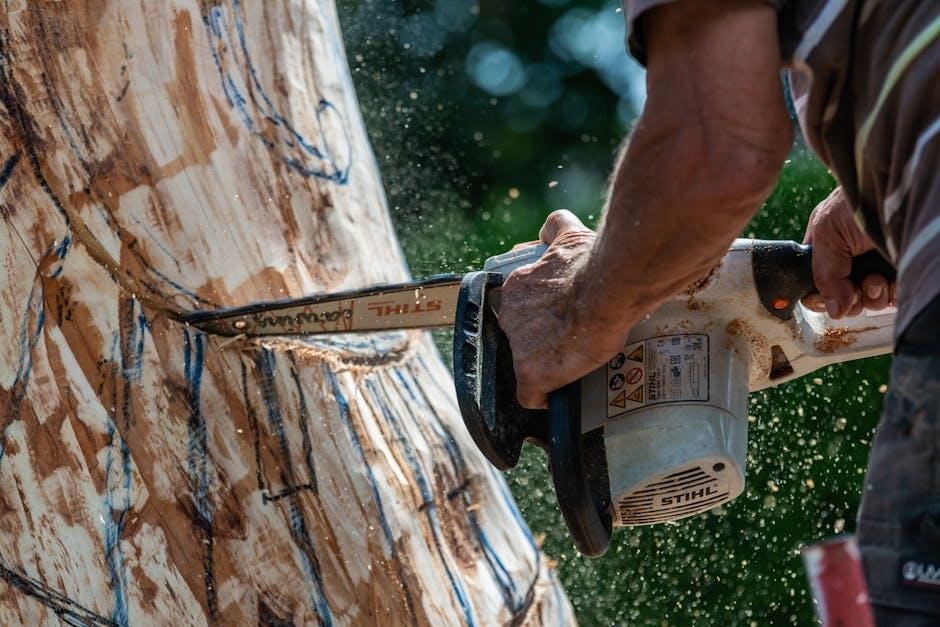
For long-term storage, clean the Husqvarna 435 thoroughly and drain fuel. Secure the chainsaw to prevent damage during transport, utilizing a scabbard for the bar and chain. Store in a dry, locked location, away from children and flammable materials.