

Understanding the Holocaust Webquest
This Holocaust Webquest offers a comprehensive learning resource for students. It serves as an educational tool‚ guiding exploration and fostering a detailed understanding of this tragic historical event‚ ideal for pre-reading activities in Holocaust units.
Comprehensive Learning Resource
The Holocaust Webquest is meticulously designed as a truly comprehensive learning resource‚ providing students with a profound and detailed understanding of this pivotal historical event. It integrates a rich variety of engaging activities‚ including the critical analysis of primary sources‚ the viewing of informative videos‚ and the completion of interactive exercises‚ all crafted to deepen student comprehension. This educational tool facilitates a thorough exploration‚ offering structured units and thought-provoking questions that guide learners through the complexities of the Holocaust. By incorporating embedded hyperlinks to reputable online resources‚ the webquest ensures both accuracy and sensitivity in its approach‚ making it an invaluable asset for any curriculum. Furthermore‚ the accompanying answer key PDF provides detailed responses‚ transforming this into an all-encompassing guide for both teaching and learning‚ supporting robust educational outcomes for students delving into this critical period of history.
Educational Tool for Exploration
The Holocaust Webquest Answer Key PDF serves as an exceptional educational tool‚ specifically crafted to guide students through a comprehensive and sensitive exploration of the Holocaust. It facilitates a deeper understanding of this tragic historical event by presenting structured units and questions that are both informational and inferential. This resource meticulously integrates embedded hyperlinks‚ ensuring seamless student accessibility to a wealth of reputable online sources. These links guarantee accuracy and sensitivity‚ crucial when addressing such a systematic and profound historical period. Ideal as a pre-reading activity for works like The Diary of Anne Frank or to effectively complement existing Holocaust units‚ the webquest encourages independent research and critical thinking. Its format‚ available as a printer-ready PDF file and a Google link‚ allows for flexible deployment in various educational settings. Students can navigate through the content‚ engaging with diverse materials to construct a nuanced perspective on the past‚ fostering significant learning outcomes regarding the Holocaust’s complexities. This tool truly empowers student-led discovery.

Pre-Reading for Holocaust Units
The Holocaust Webquest serves as an ideal pre-reading activity‚ perfectly designed to introduce students to the profound complexities of this historical period before delving into in-depth Holocaust units or related novels. This resource is particularly beneficial as an introductory activity for literature such as The Diary of Anne Frank‚ providing essential background knowledge. Students can engage with the webquest as an in-class assignment‚ homework‚ or an integral part of a larger unit exploring World War II and its atrocities. By navigating through embedded hyperlinks to reliable online resources‚ students gain initial insights into key events‚ including Hitler’s rise to power and the origins of Nazi Germany. This preliminary research prepares them for deeper textual analysis and discussion‚ ensuring a foundational understanding of the historical context. The structured questions‚ available with a comprehensive answer key in PDF format‚ guide their initial exploration‚ setting the stage for more nuanced learning. It’s an invaluable tool for building foundational knowledge before complex topics are fully addressed.
Core Components of the Webquest
The webquest features structured units with questions‚ embedded hyperlinks to reputable online resources‚ and a variety of activities. These include reading primary sources‚ watching videos‚ and completing interactive exercises.
Structured Units and Questions
The Holocaust Webquest is meticulously organized into structured units‚ designed to guide students through a comprehensive exploration of this profound historical event. These units feature a diverse array of questions‚ crafted to be both informational and inferential‚ prompting students to engage critically with the material. For instance‚ questions might delve into the specifics of “The Final Solution‚” asking about areas set up for Jewish separation‚ the names of death camps like Auschwitz-Birkenau‚ or the various methods of extermination employed. Other inquiries may address the overall death toll‚ challenging students to grasp the immense scale of the tragedy. One iteration of the webquest includes 46 questions‚ serving as an excellent introductory activity for a Holocaust unit or novel. Another version offers 20 questions‚ making it suitable for in-class assignments or homework. Students are directed to navigate provided online resources to formulate their responses‚ fostering independent research skills and deeper understanding of key events‚ such as Hitler’s rise to power in Germany and the origins of the Nazi regime. This structured approach ensures a thorough and engaging learning experience.
Embedded Hyperlinks and Online Resources
A crucial feature of the Holocaust Webquest is its seamless integration of embedded hyperlinks and reputable online resources. These digital connections are provided directly on the webquest pages‚ ensuring effortless student accessibility. Learners can click on bold-font internet connections to locate the information required to answer the structured questions. This design allows students to navigate reliable online resources without interruption‚ fostering independent research and critical evaluation of sources. For instance‚ instructions often direct students to specific websites‚ such as the United States Holocaust Museum website or sections of the PBS website for ‘Inside…’. These links are carefully chosen to ensure accuracy‚ sensitivity‚ and depth in addressing the systematic nature of the Holocaust. By leveraging these digital pathways‚ the webquest transforms into an interactive educational tool‚ enabling students to explore primary sources‚ watch relevant videos‚ and engage with interactive exercises. This approach enhances the learning experience‚ making complex historical content accessible and engaging through curated online content.
Variety of Activities and Exercises
The Holocaust Webquest incorporates a rich variety of engaging activities and exercises designed to deepen student understanding. Students engage in tasks such as reading primary sources‚ watching educational videos‚ and completing interactive exercises that bring historical events to life. The webquest questions themselves are thoughtfully crafted‚ encompassing both informational queries that require direct retrieval of facts and inferential questions that prompt deeper critical thinking and analysis. This blend encourages students to go beyond mere memorization‚ fostering a more profound engagement with the material. Activities might include researching key events in Hitler’s rise to power‚ exploring the intricacies of concentration camps like Auschwitz through dedicated PBS website sections‚ or analyzing KWL charts related to Anne Frank. It is suitable for diverse classroom applications‚ serving effectively as an in-class activity‚ a comprehensive homework assignment‚ or an integral component of a larger Holocaust unit. This multi-faceted approach ensures a dynamic and comprehensive learning experience.

Key Historical Content Covered
The webquest delves into Hitler’s rise‚ the Final Solution‚ and death camps like Auschwitz. It covers Anne Frank‚ diverse victims including Jewish people‚ Poles‚ Catholics‚ and the staggering death toll.
Hitler’s Rise to Power
The webquest comprehensively explores the pivotal period of Adolf Hitler’s ascent to political power in Germany. Students engage with materials detailing the key events that allowed the Nazi party to gain control‚ beginning around 1937 according to some sources. This section provides a foundational understanding of the political and social climate that enabled Hitler’s authoritarian regime to take root. It examines the initial strategies and ideological underpinnings of the Nazi movement‚ highlighting its radical origins and how it systematically dismantled democratic institutions. By researching these critical early stages‚ students can grasp the foundational elements that led to the subsequent horrific acts of the Holocaust. The structured questions within the webquest guide learners through an analysis of the historical context‚ emphasizing the gradual consolidation of power and the suppression of opposition. This vital background knowledge is essential for comprehending the broader narrative of World War II and the systematic persecution that followed.
The Final Solution and Death Camps
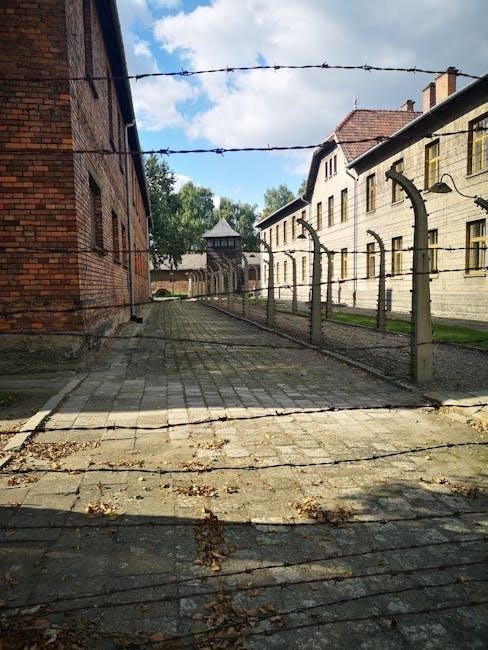
This section of the webquest deeply examines “The Final Solution‚” the horrific Nazi plan for the systematic extermination of European Jews. Students will explore the chilling mechanisms and locations of the death camps‚ which were central to this genocidal policy. Key extermination camps like Chelmno‚ Belzec‚ Sobibor‚ Treblinka‚ Auschwitz-Birkenau‚ and Majdanek are specifically highlighted as sites of mass murder. The webquest details the brutal methods employed‚ including systematic gassing‚ mass shootings‚ and the widespread deaths from disease and starvation that characterized these facilities and associated ghettos. Auschwitz-Birkenau stands out as the most infamous Nazi death camp. It functioned as a massive complex for concentration‚ forced labor‚ and extermination‚ serving as the grim hub of a network comprising over 40 satellite camps. Understanding these specific sites and their meticulously planned operations is crucial for grasping the unimaginable scale and systematic nature of the Nazi atrocities. The webquest guides students through the grim realities of these extermination centers‚ revealing the devastating impact on millions of victims and illustrating the deliberate intent behind the genocide.
Focus on Auschwitz and Anne Frank
This webquest dedicates significant attention to two pivotal elements of Holocaust study: the notorious Auschwitz-Birkenau camp and the enduring legacy of Anne Frank. It serves as an excellent pre-reading activity for “The Diary of Anne Frank‚” preparing students with essential background. Learners will engage with tasks designed to research Anne Frank’s life and experiences‚ providing a personal lens into the broader historical tragedy. Moreover‚ the resource extensively covers Auschwitz-Birkenau‚ recognized as the most infamous Nazi death camp. This complex was a massive concentration‚ forced labor‚ and extermination camp‚ acting as the central hub for over 40 satellite camps. The webquest tasks guide students to explore the specific atrocities committed at Auschwitz‚ including its role in the “Final Solution.” By focusing on both Anne Frank’s individual story and the industrial scale of extermination at Auschwitz‚ students gain a profound understanding of the Holocaust’s human cost and systematic implementation‚ connecting personal narratives with overwhelming historical facts.
Types of Victims and Death Toll

The webquest meticulously examines the diverse groups targeted by Hitler and the Nazis during the Holocaust. It clarifies that Jewish‚ Polish‚ Catholic‚ Serbs‚ and handicapped individuals were among the primary victims of this systematic genocide. Students will investigate the brutal methods of extermination employed‚ encompassing gassing‚ mass shootings‚ and the horrific deaths caused by disease and starvation within concentration camps and ghettos. The structured questions within the webquest are designed to illuminate the immense scale of this human catastrophe. Through research‚ learners will uncover the staggering overall death toll‚ estimated at approximately 11 million lives lost. This figure includes over a million victims specifically at death camps like Chelmno. The accompanying Holocaust Webquest Answer Key PDF provides specific data and detailed explanations for these grim statistics. It supports students in accurately identifying the various victim categories and comprehending the devastating numerical impact of the Holocaust‚ ensuring a thorough and sensitive grasp of the historical facts and human cost.
The Holocaust Webquest Answer Key PDF
The Holocaust Webquest Answer Key PDF provides detailed answers for deeper understanding. This invaluable educational tool offers easy grading‚ supporting teachers and students with comprehensive‚ accurate solutions for their historical research.
Detailed Answers for Deeper Understanding
The Holocaust Webquest Answer Key PDF is an indispensable educational tool‚ providing comprehensive and detailed answers that are crucial for students to achieve a deeper understanding of this pivotal historical period. It goes beyond simple factual recall‚ offering insights into complex events like Hitler’s rise to power‚ the horrifying implementation of The Final Solution‚ and the systematic operation of death camps such as Auschwitz. The key clarifies the types of victims targeted and the devastating death toll‚ ensuring students grasp the full scope of the tragedy. By presenting well-researched responses to both informational and inferential questions‚ this resource facilitates a thorough engagement with primary sources and historical narratives. It helps students connect the dots between various aspects of the Holocaust‚ from the initial discriminatory policies to the ultimate atrocities‚ thus fostering a nuanced and empathetic comprehension of the past. The structured nature of the answers guides learners through a comprehensive exploration‚ reinforcing their knowledge and critical thinking skills.
Easy Grading and Teacher Support
The Holocaust Webquest Answer Key PDF is an invaluable resource meticulously designed to offer easy grading and robust teacher support. Teachers will find the included answer sheet an efficient tool for evaluating student responses‚ streamlining the assessment process significantly. This key simplifies the task of reviewing student work‚ whether the webquest is assigned as an in-class activity‚ homework‚ or as a component of a broader Holocaust unit. The comprehensive nature of the answers ensures consistency in grading‚ allowing educators to quickly verify the accuracy and completeness of student research. Furthermore‚ the availability of the key in a printable PDF format means it’s readily accessible and easy to integrate into lesson planning. It acts as a reliable guide for teachers‚ providing all the necessary solutions to the WebQuest questions‚ thereby reducing preparation time and enhancing instructional efficiency. This targeted support helps educators focus more on facilitating student learning and discussion rather than spending excessive time on grading logistics.
Available Formats and Digital Access
The Holocaust Webquest Answer Key PDF is conveniently provided in multiple accessible formats to suit diverse educational environments. Primarily‚ it is available as a printer-ready PDF file‚ ensuring educators can easily download and print physical copies for classroom use. Beyond traditional print‚ a significant advantage is the inclusion of a Google link‚ enabling users to make a copy directly in their Google Drive. This digital access is crucial for modern learning‚ supporting both online and blended educational models. Furthermore‚ a digital version in Google Slides is often included‚ allowing students to type answers directly and submit their work electronically‚ fostering seamless integration into digital classrooms. The answer key PDF can also be edited online‚ facilitating the typing of text‚ completion of fillable fields‚ insertion of images‚ and even highlighting or blacking out data for discretion. This versatility ensures that the resource is highly adaptable‚ providing comprehensive digital access for both teachers and students.
Evaluation of Student Research
The Holocaust Webquest Answer Key PDF is instrumental in evaluating the quality and completeness of student research. Teachers can effectively assess student understanding based on the thoroughness and accuracy of answers presented in their note packets or digital submissions. The detailed answers within the key facilitate accurate grading‚ enabling educators to swiftly pinpoint areas where students may require additional support or deeper engagement with the historical content. Moreover‚ the webquest often incorporates specific evaluation criteria‚ such as the incentive of earning “WEB MASTER” status and bonus points for 100% accuracy‚ encouraging meticulous research. By offering definitive responses‚ the answer key helps verify whether students have successfully utilized the provided online resources and hyperlinks to gather precise historical information. This structured approach to evaluation ensures that students not only fulfill the assignment requirements but also cultivate a profound and sensitive understanding of the Holocaust‚ refining their analytical and information-gathering competencies.